 Ilies Allali
A job-site screen, readable in full sun and usable with gloves
A 5-inch screen that reads outdoors, works with gloves on and follows the machine’s state so the operator doesn’t have to.
For the ECHO-5 V2, Mute replaces the off-the-shelf Victron display with a 5-inch LCD touchscreen driven by an ESP32, with a branded interface built in EEZ Studio. I designed the whole system, from the screen structure to every component state, down to the files handed over for integration.
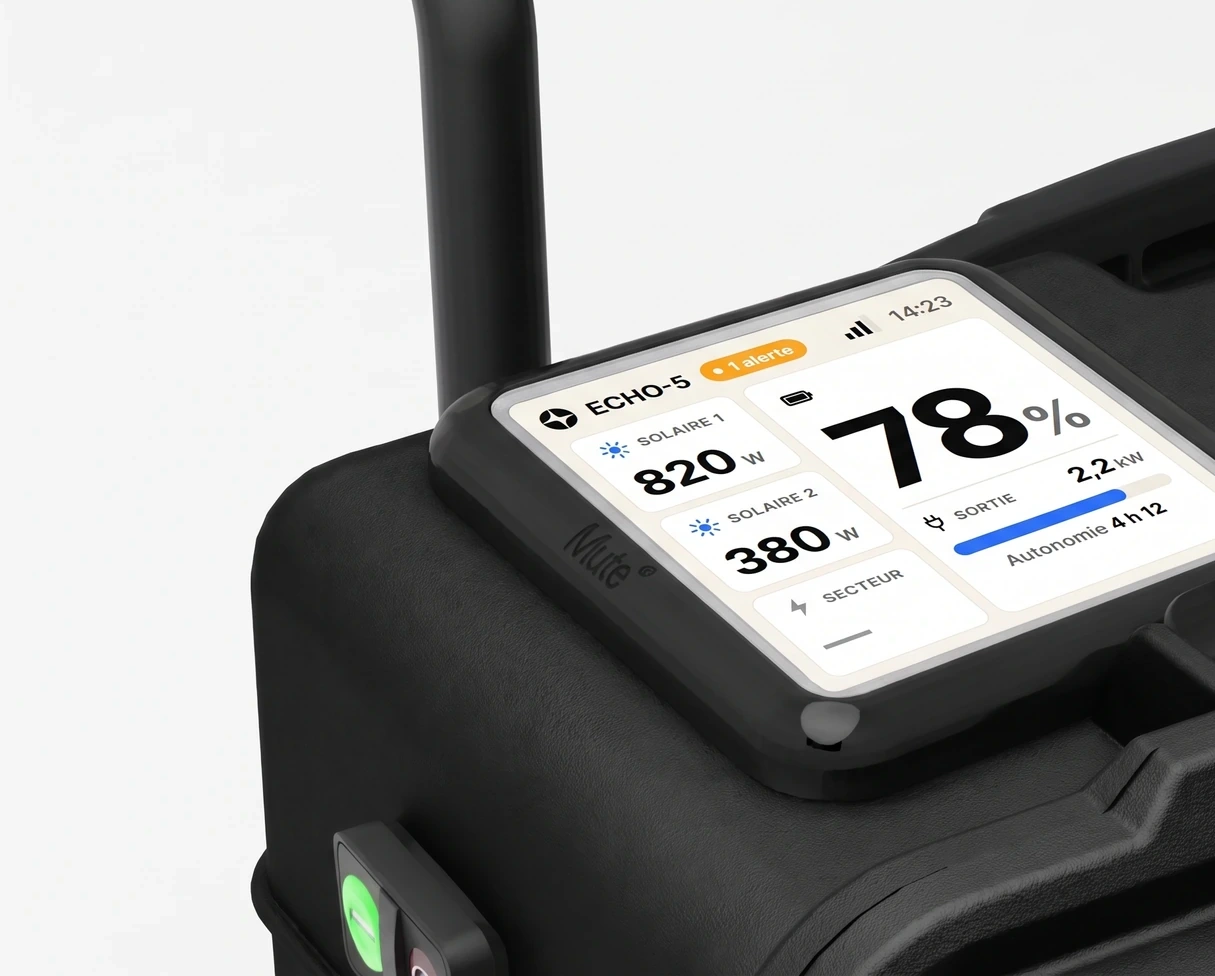
The context
The V1 shipped with the inverter’s Victron display, complete but complicated and unrelated to the brand. For the V2 I was given the interface, for a job-site operator, often wearing gloves, who reads the screen from a distance in full sun or shade. That’s why it’s an LCD rather than an OLED, outdoors contrast decides what you can read.
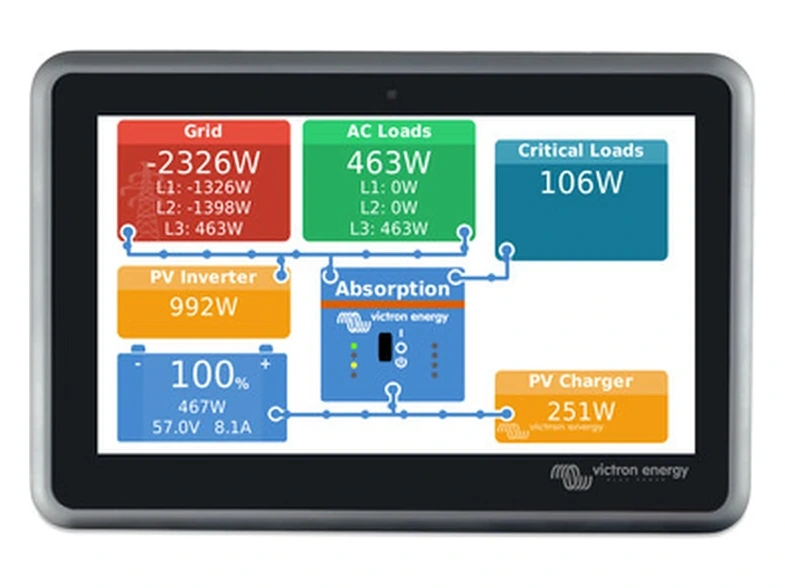
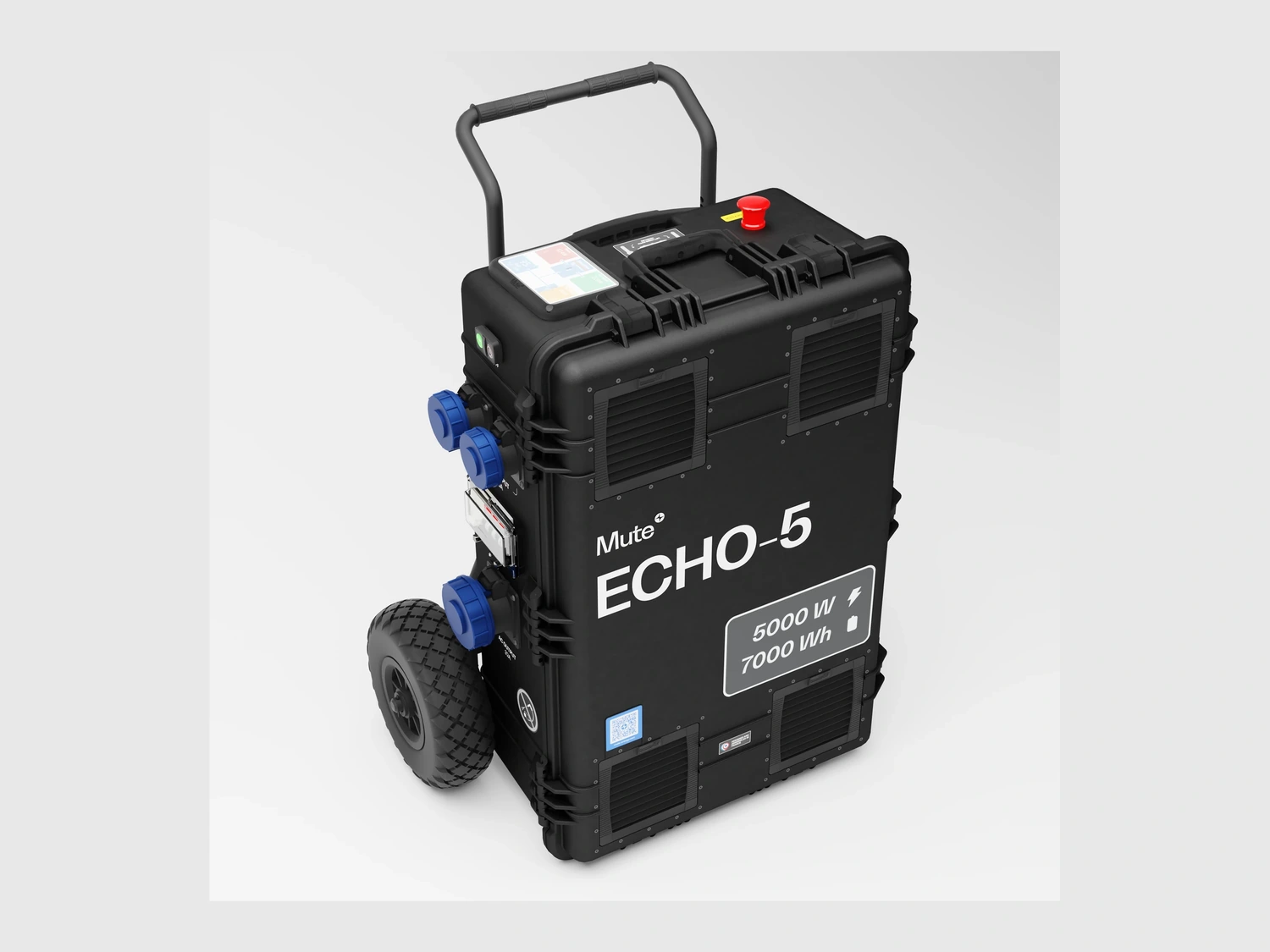
Framing before drawing
Before drawing, I asked the embedded developer whether fonts would be bitmap or vector and how the touch layer behaved, because the answers changed the whole state logic. Then I placed every piece of information, voltage, power, runtime, alerts, on a screen in a list of stories, to decide where it shows before talking about design.
What shows, and when
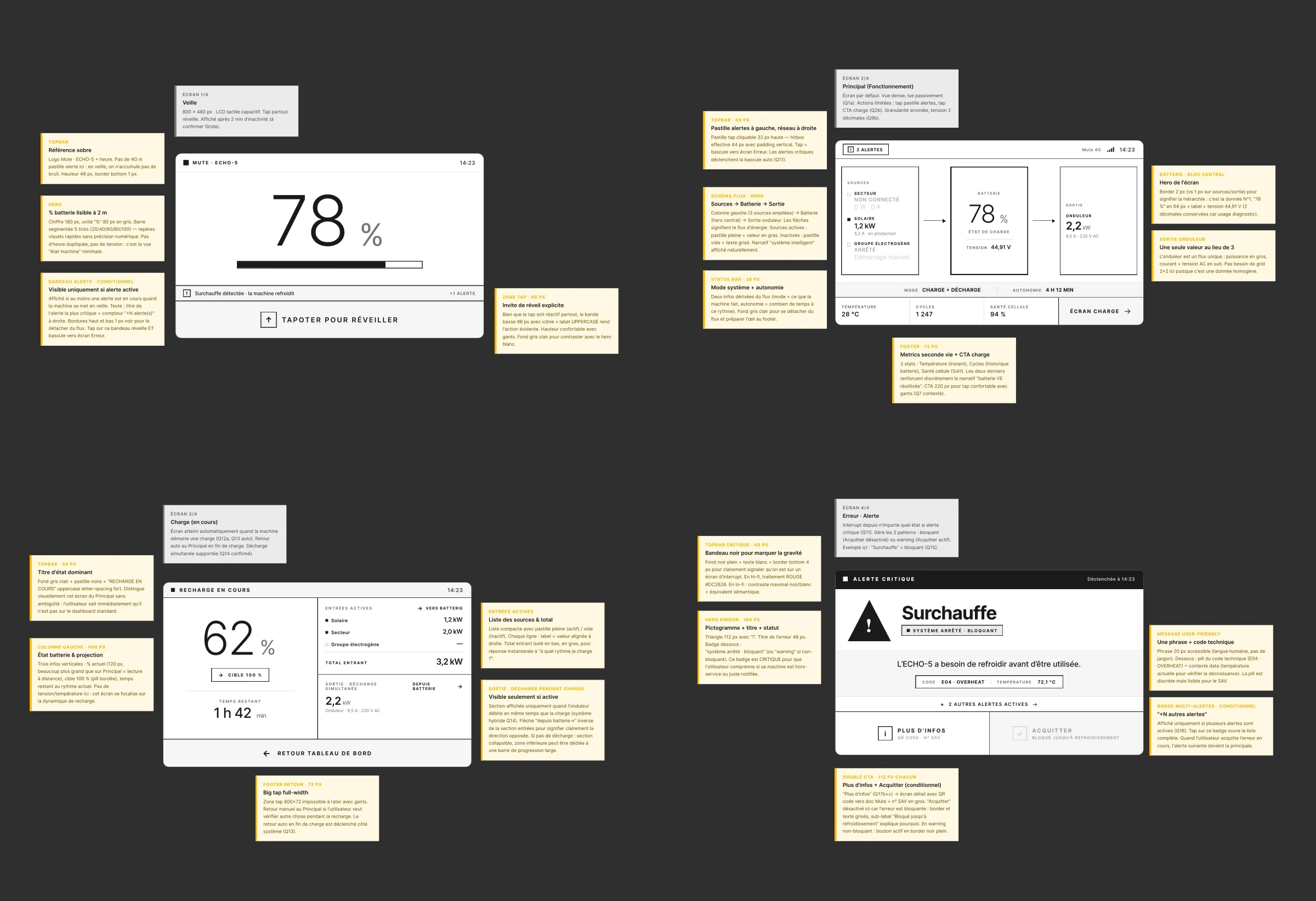
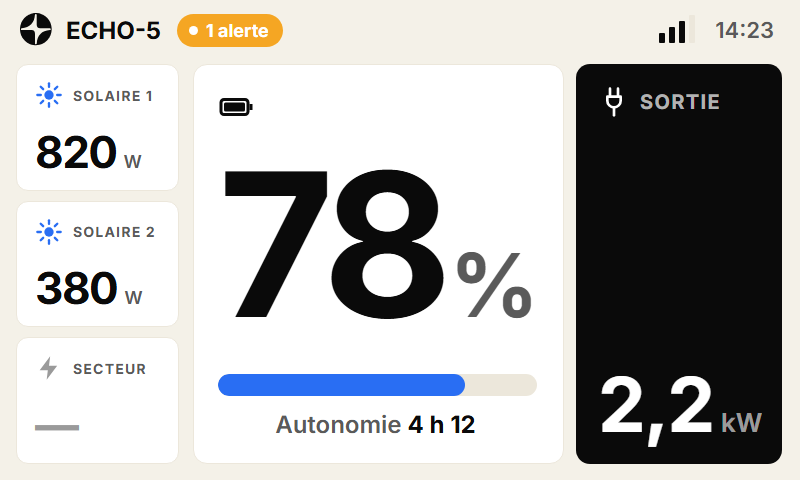
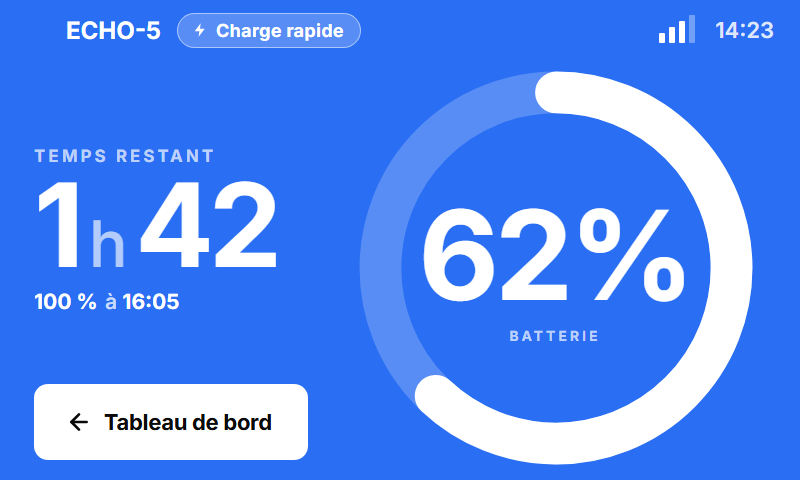
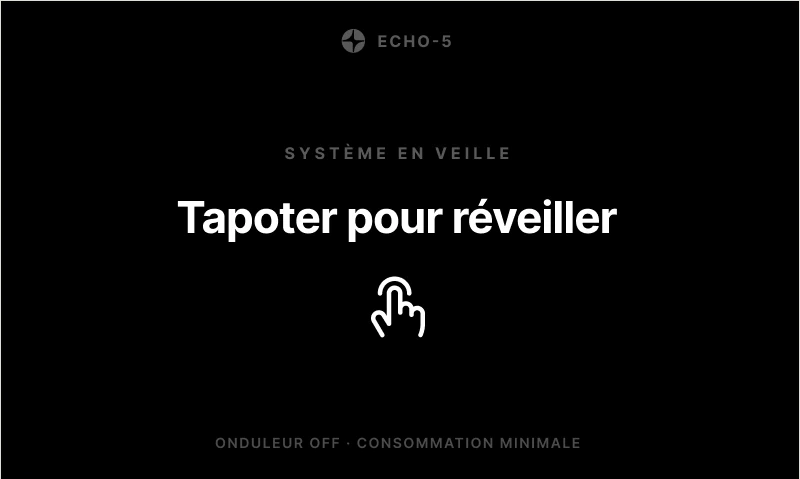
The main screen keeps the mental model years of Victron installed, sources on the left, battery in the middle, outputs on the right. I also split two states people easily confuse, the screen sleeping while the machine runs and the system sleeping with everything off. The hardest part is fitting eleven readings on 5 inches, and the whole hierarchy rests on the gauge and the mode.
Field decisions
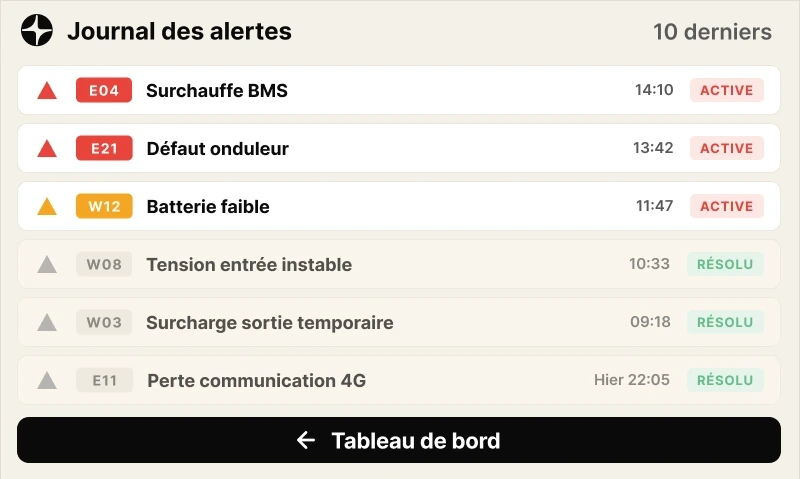
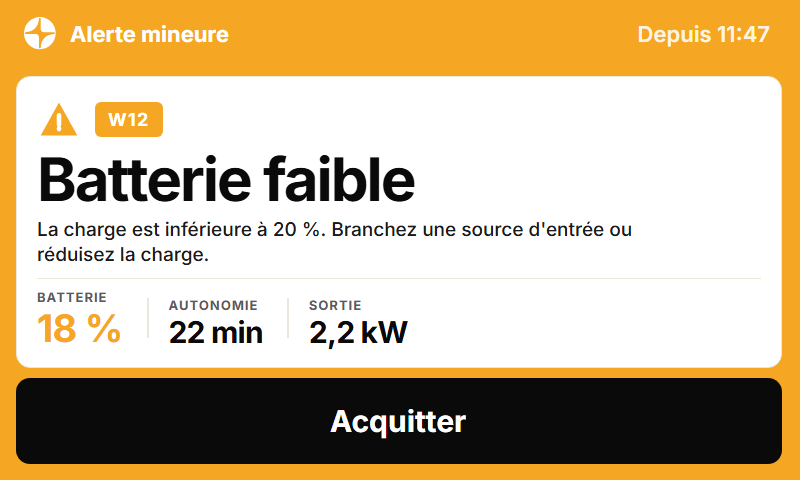
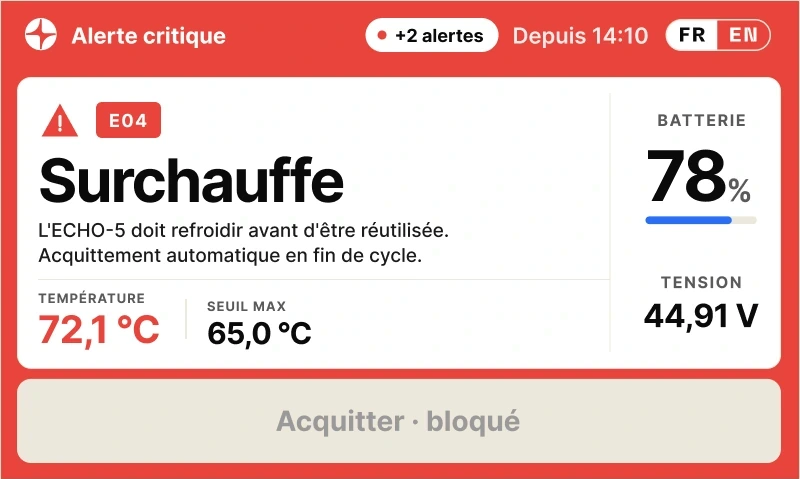
The brief leaned towards a dark mode to save power, except an LCD in full sun makes it unreadable, so light mode became the default. Touch targets are at least 60 px for gloved fingers. And the screen follows the machine, a moderate alert shows as a badge, a critical one switches to a dedicated screen whose acknowledge button stays greyed out until the cause is fixed.
Details that ship
I prototyped the screens in HTML so the developer gets a reference that runs rather than a picture to interpret, each component with its states, normal, pressed and disabled. The interface ships with the V2, and new screens are added as the machine gains modes, such as solar input.